

No Fear in Love
A young man overcomes traditional superstition and fear.
In many African cultures, especially in the rural areas of Togo, death is not just a personal loss—it is shrouded in mystery and spiritual tension. People believe that the spirits of the dead continue to influence the lives of the living. If a death is sudden or unexplained, it is often attributed to witchcraft or curses from angry ancestors. Many fear that a deceased relative can bring misfortune unless rituals and sacrifices are made to appease them.
When my father became seriously ill and passed away in 2011, I was just four years old. Tradition dictated that my father’s family was responsible for caring for us, but instead of stepping in, they abandoned us. Suspicion and fear of spiritual misfortune were likely the root cause. (Families sometimes fear that taking in orphans could bring a “spiritual curse” upon them—especially if they believe the family is haunted by bad luck or dark forces.)
My mother took my sister and I back to her village of Sanda Afohou where we lived in my grandmother’s home. Life became very hard. My mother and grandmother tried their best to provide for us, but the financial burdens were heavy ones. Then, only a year after our arrival in the village, my mother fell seriously ill. Despite visits to local healers, sacrifices made at the family shrine, and traditional treatments, nothing helped. She passed away, leaving my sister and I as orphans.
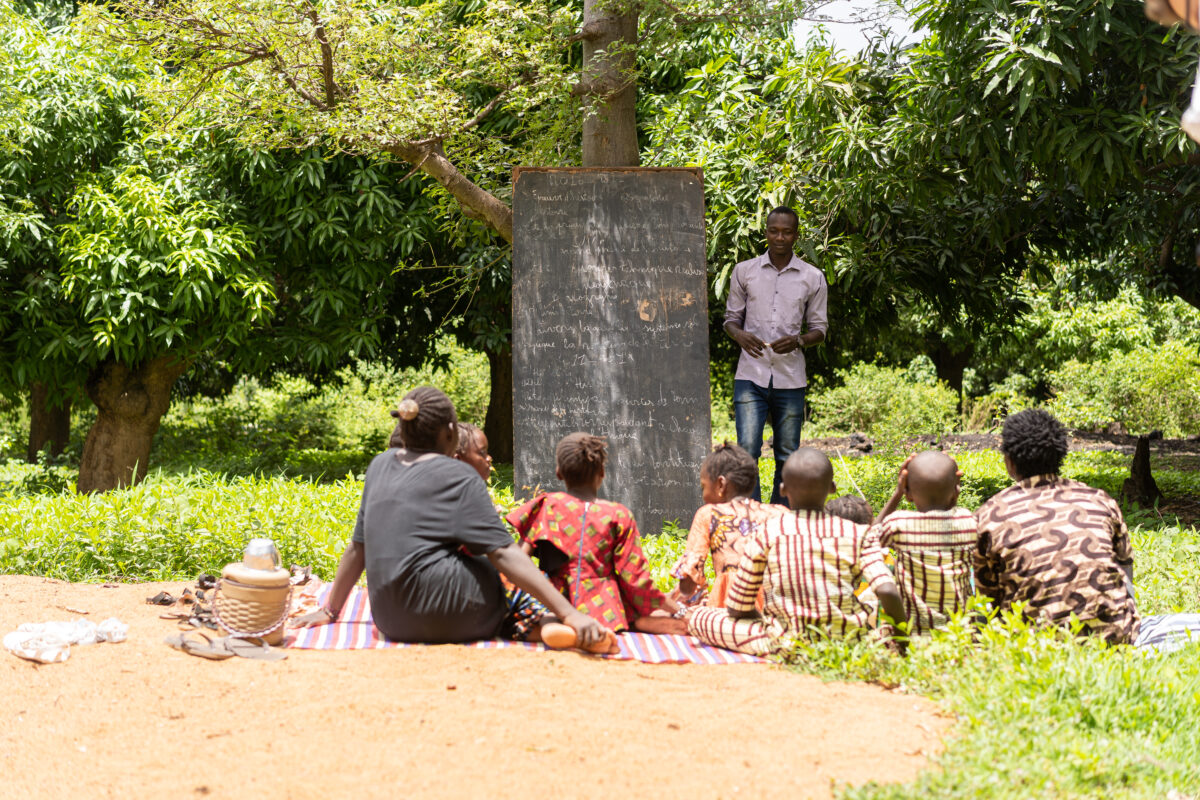
But God had not forgotten us. In 2015, something unexpected happened: a Seventh-day Adventist pastor named Agamah came to our village to distribute school supplies to underprivileged children. My sister and I were among those selected, and their kindness and compassion moved me. We began attending their church services, and for the first time, I heard about a God who loved us personally—not one to be feared like the ancestral spirits, but a Savior who gave His life for ours.
When my grandmother, too, fell seriously ill, Pastor Joël and other church members visited our home regularly. They prayed with us, brought us medicine, and offered encouragement. In those moments, I no longer felt abandoned. I began to understand what it meant to be part of the family of Christ.
Miraculously, my grandmother recovered. The church’s love and care had shown me a new way—a way not controlled by fear of the dead but led by the hope of the living God. Joël gave me a Bible, and it became my passion to read it every morning to discover my God and Savior.
Many people in Africa still live in deep fear—fear of curses, spirits and witchcraft. But I learned that Jesus is greater than all those things. He is not a distant spirit to be bribed with sacrifices, but a Savior who came close, who suffered with us, and who offers peace. By God’s grace, I’m now preparing for baptism, and I no longer live in fear of the dead or of witchdoctors. I live in the hope and freedom of Jesus Christ. Please support me in prayer as I commit my life fully to the One who never left me—my Savior and Friend.
Location
Togo
Author
Told by Henoch to Agamah Balakibawi, a district pastor in the Kara region of Togo.
How You Can Help
Pray for Henoch as he learns more about our loving God in heaven and witnesses for Him.
Pray for the eight Bible workers as they seek out those who are searching for the truth.
Donate to the evangelistic work in Togo by sending your gift marked “Togo Evangelism” to:
Mission Projects International
PO Box 237
Kirksville, MO 63501
To give securely online, visit:
www.missionspro.org/donate
Thank you. Your gifts sustain eight full-time Bible workers and one full-time evangelist who are bringing God’s last warning to Togo. Thank you so much for your support of these workers!