
Water Wells Fuel Revival, Part 1
A firsthand report of how well-drilling has made a difference in Zambia.
In Southern Zambia, the dry season arrives with the intensity of a furnace. By the month of May, the rains have gone, fields crack and dust rides the wind across miles of bush track. Yet in village after village, life persists—and even flourishes—around a new heart of community: clean, reliable water wells.
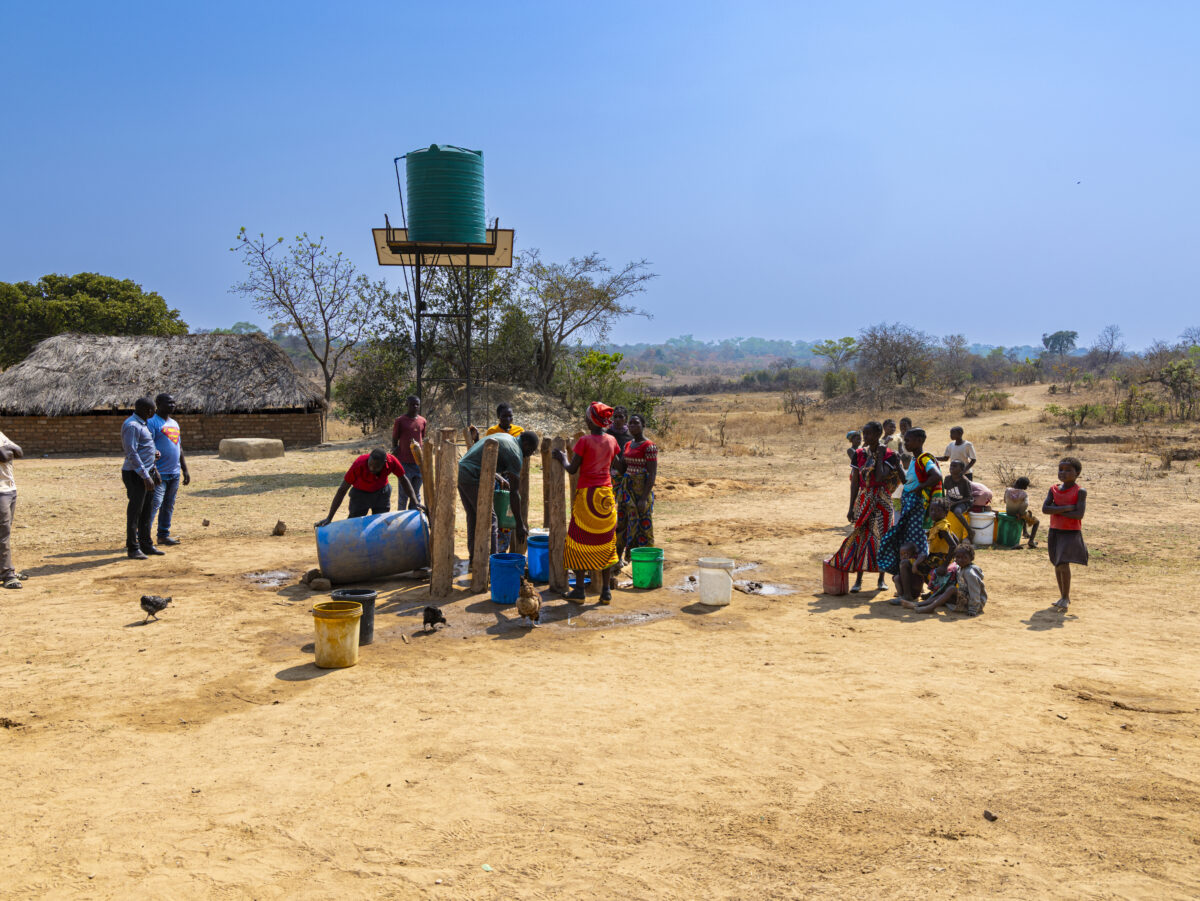
Recently, our team traveled long, bumpy roads to visit every site where wells have been drilled across the Monze and Choma areas. The scale of the territory is staggering, and the need for clean water is intense. Some of the most remote wells now serve between 500 and 1,000 people a day. Streams of women with buckets balanced on their heads, boys pushing bicycles with jerrycans, and elders cupping their hands for a drink all meet at the well for life-giving water. In places where not a drop of rain has fallen since May, the sound of water splashing into a container is the sound of survival—and of hope.
These wells do more than to quench thirst: they anchor livelihoods. With dependable water, families can keep small kitchen gardens alive through the dry months, thereby stretching harvests and warding off hunger. Livestock remain healthy. Children who once walked for hours for water now spend more time in school. Mothers who once rationed murky river water now draw clean water within minutes of home. The well has become a daily gathering point, a center of influence where neighbors talk, help one another, and hear good news.
And it’s at the well—literally—that the gospel is drawing people together. Pastor Hillary Moonga, who has long shepherded a sprawling field of congregations, believes that every new water point is also a new mission station. The past two years have proved him right. Since drilling began in these districts, Pastor Hillary and eight full-time Mission Projects International Bible workers have helped plant more than 35 new congregations in the Choma district alone. Many of these churches started with just 15–25 newly baptized believers; today, most attract 100–250 worshipers every Sabbath. And the fastest growth is consistently found where a Bible worker is stationed near a well.
How does water translate into conversions? First, wells embody tangible love. Villagers quickly understand that Christians didn’t arrive with a sermon alone—they brought a solution to a daily crisis. As the well becomes part of the rhythm of life, so does spiritual conversation. People who would never attend a church meeting linger long enough to ask questions of the Bible worker who not only greets them at the pump but also helps organize queues and prays for the sick. Children pull up with their containers and stay for story time and memory verses under a shade tree. In the evening, when the heat lifts, many return for hymn-singing and simple health classes. The well is the bridge; the Word is the living water.
Second, wells create natural leadership networks. Each site needs caretakers, a schedule and a committee to steward this precious resource. Bible workers mentor these groups and weave practical stewardship with discipleship. Over months, those caretakers often become the nucleus of a home group, then a branch Sabbath School, and, in God’s time, a church. As one elder told us, “Before the water, we were scattered. Now we meet every day—first to draw water, then to draw near to God.”
What began as a practical response to drought has become a movement of mercy and mission, opening doors for the gospel and transforming entire districts.
Location
Zambia
Author
Mike Bauler is the director of Mission Projects International.
How You Can Help
Pray for the evangelistic work Pastor Moonga and his team of Bible workers are doing in Zambia, especially the mass evangelism that is planned for this year.
Pray for those who are receiving the water of life from the wells in Zambia!
Give. Funds are needed to provide Bibles to new believers, build churches, support church planters, and purchase a light duty truck to transport workers and equipment. Send your check marked “Zambia Wells,” “Zambia Bibles,” or “Zambia Workers” to:
Mission Projects International
PO Box 237
Kirksville, MO 63501
To give securely online, visit:
www.missionspro.org/donate